No shame. Just pure masculine energy. That’s always been our foundation. We create raw, unapologetic music and visuals that celebrate male power, brotherhood, confidence, and the kind of direct, masculine connection that resonates deeply with men who love men. Our latest album, BATE FUEL, channels that drive. It’s music for grown men embracing their desires without filters. It’s not background listening for casual crowds. It’s brother-to-brother expression rooted in real male experience.

But here’s the reality we faced when building our website and video platform after YouTube terminated our channel. To get any real visibility in today’s algorithm-driven world, we’re pressured to label our work as “Queer” or “LGBTQ+” even though it’s made specifically for gay men. Our core audience seeks masculine, straightforward content. It doesn’t broadly appeal across the entire spectrum. Calling it something else feels like diluting the truth just to navigate the system.
Now, we know our work is hypersexual. Songs and videos like BIG WHITE DONG and I REALLY NEED TO CUM are really explicit lyrically. But there is a place for sexually explicit music in this world. We’re following in the tradition of “Baby Got Back” by Sir Mixxalot and “Me So Horny” by 2 Live Crew. Except our work is by gay men for gay men. We sing about loving big dicks and having sex with each other. And there is absolutely nothing wrong with that. Did our videos push the envelope? Yes. But art should push the envelope and be risky. Especially music about sex and sexuality. This is vital in a world that is increasingly restrictive towards adult expression of love and sex. We do not sing or make music about murder or illegal drug use. Many music videos on YouTube celebrate these things.
This website is set up like an old gay magazine that used to exist quite commonly. We have stroke stories and articles about the adult gay male experience. The stuff on this website was never meant to be seen by those who were not interested in it. And we definitely did not put it on YouTube. We link to this website from our linktree which was linked from our YouTube account. Many YouTube creators link to linktree and then to their OnlyFans. YouTube allows quite a bit of adult content on their platforms but recent policy changes have been more restrictive across the board. We were told that if a policy changes and your content, which previously adhered to policies, is found to be in violation, channels can be terminated without a chance to rectify it. As public support wanes for LGBTQ+, we thought it was ironic that YouTube terminated a gay music channel during Pride Month. It’s the most homophobic thing I have experienced in a long time.
How We Got Here: The Termination and the Keyword Trap
The termination came from automated systems that flagged our content as adult material intended primarily for sexual gratification. People can find our work arousing. The same way many once did with classic physique and underwear magazines. But that doesn’t make it pornography. Our creations carry clear artistic intent: original music, storytelling, visuals, and themes of personal reawakening and masculine strength. YouTube had previously approved several of our videos after getting flagged by automated systems, but the BATE FUEL release triggered a wave of flags. The direct nature of the material, combined with certain keywords, set off the alarms.
There have also been tests showing that “gay,” “lesbian” and similar terms have triggered automatic demonetization. Our content here on this website is different than what we put on YouTube. We carefully edited our videos to adhere to the policies. We looked at what other musical artists were doing and we stayed well below what Cardi B., Sexxy Redd and other female artists were doing. We did not simulate fellatio with dildos or popsicles shaped like penises like in a Cupcakke video called “Old Town Hoe.” We felt our music and videos on YouTube adhered to their policies and at first they agreed with us. Did we really violate the policies or did our work get in front of some automated system or human reviewer that didn’t really understand the focus and intent of our innovative work? We might never know because we failed our appeal. And you only get one shot at that.
Google Trends research showed the practical problem clearly. Searches and discovery tied to the word “gay” are heavily restricted or downranked. Platforms steer creators toward “queer” and “LGBTQ+” instead. Creator reports and tests over the years confirm that including “gay” or similar specific terms in titles, tags, or descriptions often leads to demonetization, age-restrictions, limited reach, or termination. These words get automatically associated with adult categories in the eyes of advertisers and algorithms. Broader terms like “queer” tend to face fewer immediate barriers.
We respect the need to protect minors. Our content is made for adults, and we implement age gates and responsible practices on our platforms. But the automated systems rarely consider artistic context or intent. They react to keywords. “Gay” signals higher risk. As a result, many creators focused on gay male experiences get channeled into the wider “Queer/LGBTQ+” category to survive. We purposely did not use the keywords of “queer” only to find out that if we had done so, our work may have gotten a pass from automated systems.

If other straight musical artists can make songs and music about sex and sexuality, why can’t we? And why can’t we celebrate the male body in similar ways as the female body is celebrated in videos that feature twerking and other sexualized dances? When one of our videos PROJECTION got completely removed by YouTube (it was the first one they said violated their policies) they completely missed the artistic intent of the song and video to make people confront what they view as “queer filth.” That video is one of our most profound artistic statements and the video features sexy male vampires and men bound in ropes. The imagery in the video has to be provocative to drive the message home. To illustrate how men are terrorized and held hostage by shame around their natural desires.
Our work is not purely sexual and we spend a lot of time crafting the look and feel of all of our videos. For BATE FUEL, we leaned heavily into the work of Andy Warhol and old nostalgic beefcake magazines and created short films and even a full length movie. We imagined a world without shame where a younger gay man’s sexual desire was not shamed, but celebrated. We even made special heavily-edited “MTV Versions” for YouTube where the fantasy of seeing gay men on MTV could be realized. The whole project was designed to let adult men deal with any lingering self-hatred and internalized homophobia by awakening buried emotions through eroticism. Having to label our work something it is not, completely misses the point of it all. And damages the intention and integrity of the work itself.
We understand that the themes of our work may not align with what YouTube wants on their platform. But we maintain that this work does way more than lead to sexual gratification. It heals gay men in ways that straight people may not understand because they live in a world where their sexuality and desires are seen as normal. To some straight people we will always be freaks and should belong in the shadows. The YouTube termination had a profound effect on us and brought up all sorts of buried emotions and memories of being told to hide who we were. And being told to be ashamed of what we found to be beautiful and life-affirming.
Queer: Reclaimed by Some, But Not Our Word
We don’t personally embrace “queer” as a label for our work. And the “gay music queer label” doesn’t work for us. The word queer has a lengthy history of abuse. For many of us who heard it used as an insult growing up, it doesn’t land as empowering. We understand that some have reclaimed it as a broad umbrella term. That’s valid for them. For us, it softens the specific masculine, gay male focus we’re building. Our music isn’t about abstract rejection of norms. It’s about owning male strength, brotherhood, and unashamed confidence on our own terms.
Reports suggest that even AI tools like Google’s Gemini associate “gay” more directly with adult content. The broader “queer” or “LGBTQ+” framing keeps things more discoverable and advertiser-friendly. The outcome is that we market gay men’s music under a label that doesn’t fully fit, routing it through audiences who may not connect with it before reaching the men it’s truly for.
This pattern isn’t new. Numerous creators have documented how platform algorithms disproportionately flag LGBTQ+ keywords, even in non-explicit contexts. Public support for diversity exists alongside systems that treat specific terms as red flags. And those who use the terms “queer” and “LGBTQ+” need not be offended by our choice to not label ourselves as that. It’s no admonishment against those terms and if the shoe fits, wear it. But I have always been a gay man and will continue to be a gay man. Calling myself “queer” seems like a betrayal to ourselves and a yield to all of the bullies and insults that were lobbed at us over the years. They can finally call us queer and get away with it. And it’s “advertiser-friendly.”
Google Gemini told us that the word “gay” triggers an old legacy system that could be changed, but there is no financial incentive to do so. The system works fine for most people…except gay men and gay artists. It actually told us that “gay” was associated with insults and slurs but “queer” was fine. Which is completely not true. When I pressed it on the issue, it said that the using the word “queer” is designed to get around adult content filters. There is no “queer porn” and I think that is precisely why the shift to “queer” was made in the first place. But in doing that, it divorces gay men from their own sexuality. Gay porn is popular among gay men. Just like rap music was considered CNN for young black men in the 80s and 90s, gay porn is often how gay men learn to have sex with each other and learn to love who they are.
Naming It Honestly
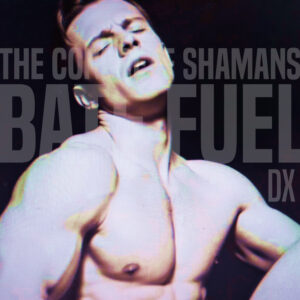
The YouTube termination, while challenging at first, ultimately became a powerful catalyst for growth. It pushed us to confront old feelings of shame and the lingering fear of societal rejection all over again. After three decades creating male erotica and artistic expressions of male sexuality on the internet, the shifting platform guidelines felt particularly jarring. Yet this moment encouraged deeper reflection on our path and reinforced our commitment to creating with integrity.
We have always believed strongly that minors should not have unrestricted access to the internet. Our own Discord server uses two-step age verification, and we are fully committed to ensuring our work stays out of reach for those under 18. At the same time, we wonder where the line is drawn so that work with clear artistic intent doesn’t get lost in the effort to protect younger audiences from spaces they simply shouldn’t enter.
Out of that experience, we’re building the BATE FUEL MEN website as a dedicated space for masculine male expression. Through original music, powerful visuals, articles and a growing community, we celebrate men who love men. It’s about strength, presence, confidence, unashamed authenticity, and real connections between brothers. This isn’t watered-down or generalized content. It’s specific, direct, and rooted in the lived experiences of gay men who embrace their masculinity fully.
Forcing work like ours under the broad “Queer” or “LGBTQ+” umbrella can feel like the system reshaping specific gay male experiences to fit a safer, more advertiser-friendly box. It risks diluting the very energy that makes the music resonate so strongly with its intended audience.
We’ll navigate the practical requirements with care — including age verification, thoughtful tagging, and building our own independent platforms. But we won’t pretend or soften our truth. This is music rooted in gay male experience, created for gay men. No shame. Just real masculine energy.
Leave a Reply
You must be logged in to post a comment.